The Kitchen That Stopped Going Through the Pass
In a small kitchen, every plate goes through one person. The same was true of the whole business — until it wasn't.
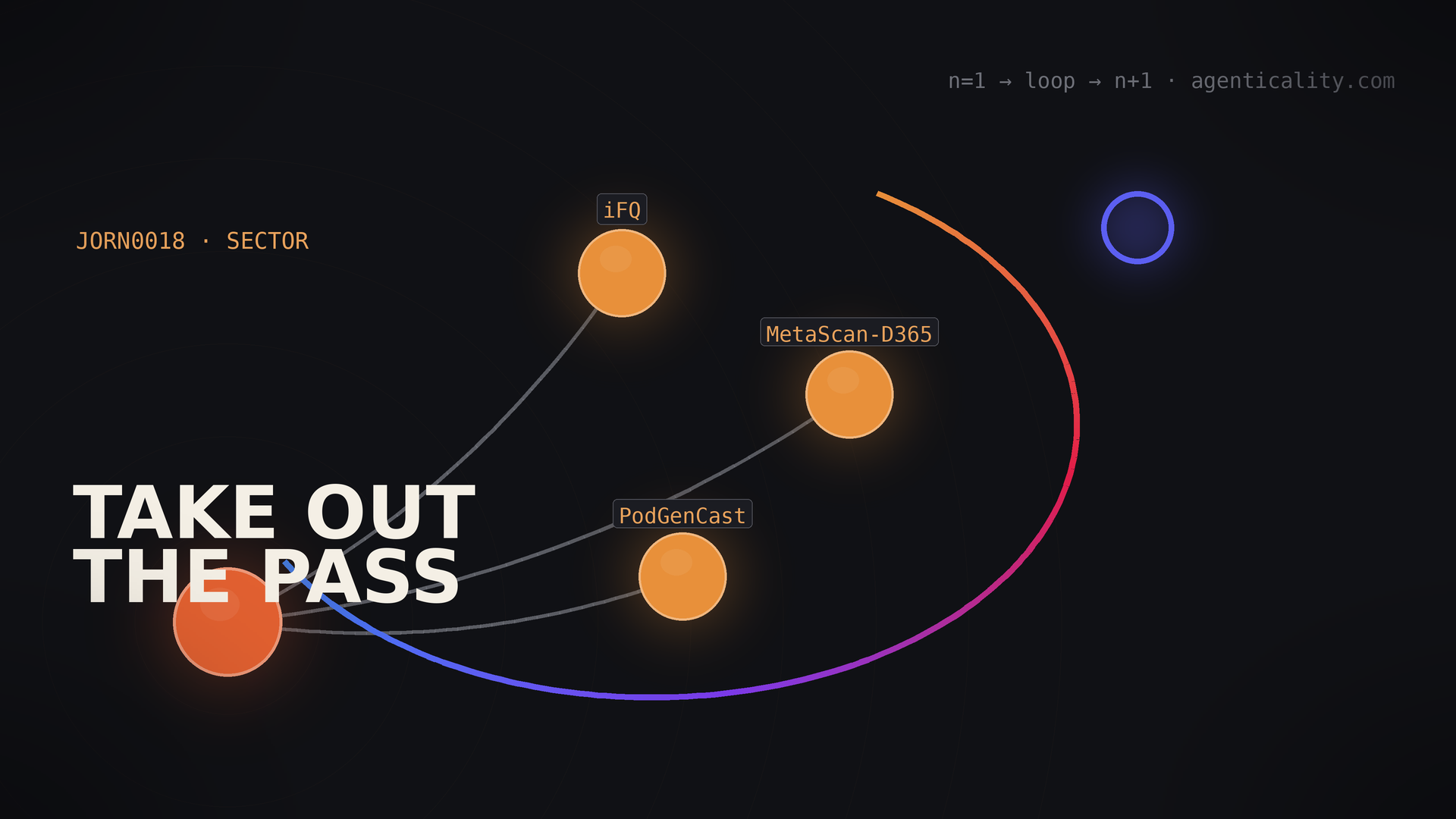
Elena's restaurant has twenty seats and a kitchen you could cross in three steps. She is the chef. Her partner Tomás runs the floor. There is a dishwasher on Friday and Saturday nights and no one else. The food is the kind people drive an hour for; the business behind it has, for six years, run on Elena's two days off — which she spends doing the books, chasing the fish supplier, fighting the booking system, and writing the specials board that doubles as the entire marketing department.
Every service, the kitchen has a shape, and the shape has a name: the pass. It is the steel counter where finished plates land and where Elena stands to check each one before it leaves — wiping a rim, turning a garnish, calling the table. Nothing reaches a diner without crossing it. The pass is quality control, and it is also a bottleneck, because on a full Saturday the entire kitchen moves at the speed of one woman's eyes.
Here is the thing nobody told Elena for six years: her whole business was built like the pass. Every supplier question, every roster gap, every late invoice routed back to her, waited for her, moved at her speed. This winter that changed — not the food, she still checks every plate — but the business behind it. And it changed what twenty seats could be.
The state of the frontier
Walk into hospitality right now and the spectacle people were promised — the robot chef, the dining room run by androids — is nowhere to be seen, because it was always the wrong picture. What is actually happening is quieter and far more useful: the cost of running the business around the food is falling through the floor.
A small restaurant has always carried a back office it could never afford to staff. A booker, a stock controller, a bookkeeper, a marketer, a supplier-relations manager, a rota planner. In a big group, those are six jobs. In Elena's place, they are six things Elena does badly on her days off, because the alternative is not doing them at all. The work did not go away; it just had nowhere to go except back to her.
What is shifting is that each of those jobs is now available at the cost of a conversation. Reconcile the week's takings, flag the supplier who quietly raised prices, rebuild the roster when someone calls in sick, draft the email to the regulars, notice that Tuesdays have died and ask why. None of this needs a new hire, and none of it needs to wait for Elena's day off. The bottleneck that was Elena stops being the only route the work can take. The pass, for everything except the food, comes out.
The compound mechanism
Here is the part the headlines miss. Elena did not buy six apps — one for bookings, one for stock, one for payroll, one for accounts, one for email, one for reviews. That is the old shape: a separate bolt-on for every job, each with its own login, its own monthly fee, its own little island that knows nothing about the others. Six bolt-ons do not give a small restaurant a back office. They give it six more things to reconcile at midnight — the org-chart tax, moved into software and billed monthly.
What actually changes the economics is one shared foundation that does all of it and, crucially, remembers across all of it. The same system that takes the booking knows the table is a regular who never orders dessert, knows the kitchen is already short on the scallops that regular loves, knows last week's invoice from the fish supplier came in eleven percent high, and writes the specials email in Elena's own blunt voice. Add the next task and the marginal cost of it is close to nothing, because the hard part — knowing this restaurant — is already paid for. That is the compound move: absorb the place once, then serve every job from the same understanding.
This is why a two-person restaurant can suddenly run like a small group. Not because Elena and Tomás work harder — they would be dead by August — but because the coordination a group pays a back office to do simply is not there to pay. Work describes what it needs and routes itself to whoever, or whatever, can do it. The roster gap finds the fix. The price rise finds the spreadsheet. The quiet Tuesday finds the email that fills it. Title stops being the address; capability is the address. The pass, for the business, is gone.
Focus did not disappear for Elena. It relocated — off the midnight admin and back onto the only thing diners ever paid her for.
Who benefits
Follow the gains and they do not pool at the top — in a place this small, there is no top to pool at.
Tomás used to be a human router. Between courses he was on the phone to the linen company, texting the Sunday casual, re-keying covers into the accounts. That work routes itself now, which means on a Friday he is where he is worth most: on the floor, reading the room, remembering that table six is a birthday and sending out something the kitchen did not have to be asked for. He did not lose a job. He got the better half of it back.
The diners benefit, though they will never know why. The kitchen runs calmer because nothing is waiting on Elena to also be the bookkeeper in her head while she plates. The regular's dessert quirk is remembered without anyone writing it down. The place feels, from the outside, like somewhere much larger is looking after the details — which is exactly the impression a small restaurant could never previously afford to give.
And Elena gets the rarest thing on the menu: her two days back. The days that vanished into chasing suppliers and fighting software are days again — to develop a dish, to stage at a friend's kitchen, to do nothing. That is not a soft benefit. Burnout is the single most common way a good small restaurant dies. Handing the owner back her week is the difference between a place that lasts a decade and one that closes, beloved and exhausted, in three.
This is what good looks like, and it is worth saying plainly because the gloomier story is louder. The win in hospitality is not a chain shedding staff to lift margins. It is the independent place that finally gets to exist — the twenty-seat room that stays open, the owner who stays standing, the town that keeps the restaurant people drove an hour for.
What stays human
It would be easy to read all this and decide the soul of the place moved into the software. It did not. What moved was the admin. The soul got more valuable, and it stayed exactly where it always was — at the pass.
The system can tell Elena that Tuesdays are dying and draft the email to fix it. It cannot taste the sauce. It can flag that the scallops are short and reorder them. It cannot decide that tonight the dish is better without them. It can remember that table six is a birthday. It cannot be the moment Tomás reads a nervous first date and quietly changes the music. The reservation, the reorder, the rota — those were never the restaurant. They were the tax it paid to keep the doors open.
Taste, welcome, the judgment to send a plate back to your own kitchen — these did not get cheaper. Everything around them did, which means they are now the whole job. There is a trust moat in here, and the small place is unusually well built to hold it. The chain competes on price and consistency. Elena competes on the thing scale erodes: that it is her hand on every plate and her name over the door. Cheap coordination does not threaten that. It clears the decks for it.
What we're building toward
We are not in the restaurant business. But Elena's twenty seats are exactly the future we are building for, and they are the same shape as the company we run.
Agenticality is one shared foundation under many products. iFinQ gives an owner like Elena — whose money is tangled across the business, the mortgage, and a tax bill she dreads — a single financial headquarters instead of six logins and a shoebox. PodGenCast turns the week's thinking into something she can listen to over morning prep, hands busy and mind free. Three products, three markets that do not move together, one capability underneath them all. We do not pay an org-chart tax to coordinate them, because the foundation is the coordination.
So when we say a two-person restaurant can run like a group, we are not forecasting. We are describing how we already work: a small team at the centre, capability at every edge, almost nothing in the middle. The work finds its own station. The judgment stays with the people whose names are on the door.
The technology will not decide whether this widens the circle or narrows it. People will — kitchen by kitchen, town by town, choice by choice. We are building for the version where the place you drive an hour for is still there next year. That is a choice, and we are making it on purpose.
— Agenticality
The pass was never where the food got better. It was where the food waited.